
If you’ve noticed staining on your home’s siding—particularly near wood trim or fascia boards—it could be more than just a cosmetic issue. That discoloration might actually be a warning sign of carpenter bee activity.
At Universal Home and Pest Solutions, we recently responded to a home where carpenter bees were boring into the wood behind the siding. This is a common problem, especially in warmer months when these bees are actively nesting.
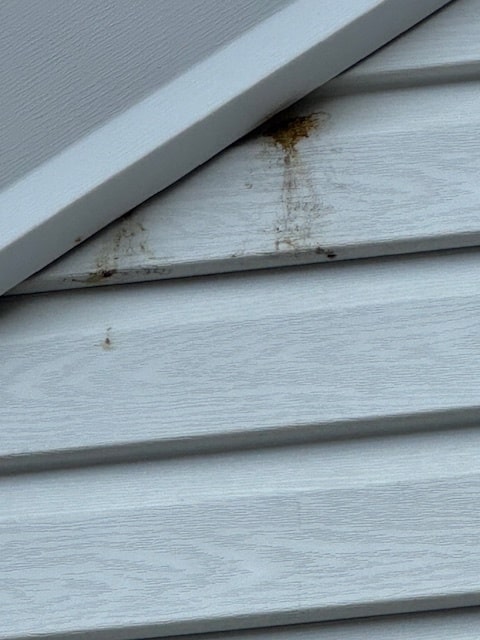
How to Spot Carpenter Bee Damage
Unlike termites, carpenter bees don’t eat wood—but they do tunnel into it to create nests. Over time, this can lead to structural damage if left untreated. One of the telltale signs? Staining around entry holes. These stains are often caused by the combination of bee waste and pollen and usually mark the entrance to their tunnels.
Our Treatment Process
To effectively eliminate carpenter bees—especially when they’re hiding behind siding—we use a specialized insecticide dust. This treatment offers several key benefits:
-
Deep penetration: The dust spreads through the tunnel systems, reaching areas we cannot treat directly.
-
Long-lasting protection: The product remains active inside the wood, discouraging future nesting.
-
Minimally invasive: There’s no need to remove siding or open up walls.
Once applied, the dust begins working immediately, killing any bees inside and preventing others from returning.
Prevent Future Infestations
While treating the infestation is the first step, we also recommend taking preventive measures to protect your home:
-
Repair or replace damaged wood
-
Paint or seal exposed wooden surfaces
-
Schedule regular inspections, especially in spring and early summer
Need Help With Carpenter Bees?
If you’re seeing signs of carpenter bee activity or just want peace of mind, Universal Home and Pest Solutions is here to help. Our expert team knows where to look—and how to treat—so you can protect your home from hidden pests.